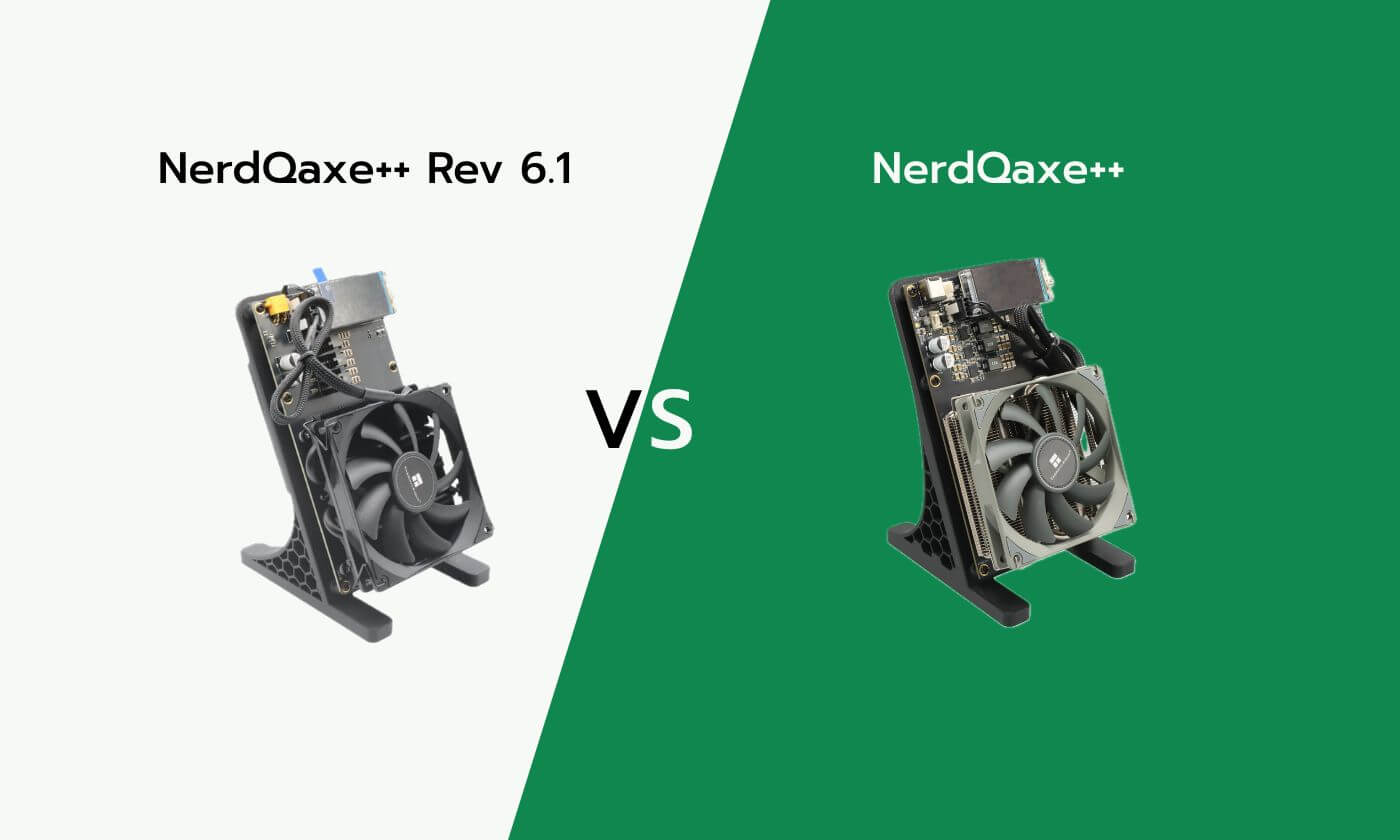
More and more people are using compact Bitcoin miners to contribute to the Bitcoin network at home or in the office. But how realistic is it to find a block yourself?
What do the numbers say?
The Bitcoin network produces an average of one new block every 10 minutes. This translates to approximately 144 blocks per day worldwide, distributed across all miners combined.
The entire Bitcoin network currently has a hashrate of approximately 600 EH/s (600,000,000 TH/s).
A typical hobby miner with a hashrate between 4 and 6 TH/s therefore has an extremely small share in the network.
Example hobby miner (6 TH/s)
- Your share: 6 / 600,000,000 = 0.000001%
- Chance of finding a block: about 1 in 100 million per block (so per 10 minutes)
- Converted per day: about a 1 in 700,000 chance (because there are 144 blocks per day)
- Converted per year: approximately 1 in 1,900 chance
By comparison, the odds of winning a major lottery like the Staatsloterij or EuroMillions are often around 1 in 140 million or even smaller. In many cases, the odds of finding a Bitcoin block as a hobby miner are actually greater than winning such a lottery.
A block currently yields 3.125 BTC + transaction fees. So the reward is high, but the probability is minimal.
Solo mining vs. pool mining
- Solo mining: you work independently and have a chance of winning the full block reward, but the chance is extremely small.
- Pool mining: you share your computing power with others and receive small, stable payouts based on your contribution.
Most hobby miners choose solo mining because the pool yields with a small miner are often not much.
Why people still do it
Hobby mining is not primarily about profit, but about:
- Better understand how everything works
- Contribute to a larger network
- Interest in technology
- Participate in an active ecosystem
Conclusion
While a hobby miner could theoretically find a block themselves, in practice the chances of success are extremely slim. Therefore, consider mining a fun and educational way to get involved with Bitcoin and support the network – with a very small, but remarkable, chance of a significant reward.